Charles B. Pierce
Biography
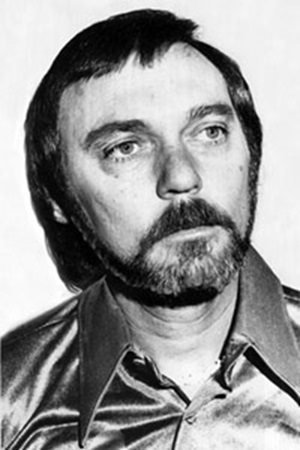
Charles B. Pierce (June 16, 1938 – March 5, 2010) was an American film director, screenwriter, producer, set decorator, cinematographer and actor, and is considered one of the first independent filmmakers. Pierce directed thirteen films over the span of 26 years, but is best known for his cult hits The Legend of Boggy Creek (1973) and The Town That Dreaded Sundown (1976). Pierce was born in Hammond, Indiana, but moved to Arkansas early in his childhood. After working in production jobs at television stations, Pierce moved to Texarkana and started an advertising agency. He made his directorial debut with The Legend of Boggy Creek, a faux documentary-style film inspired by the legend of the Bigfoot-like Fouke Monster. The film was funded largely by a donation from an advertising client, and Pierce rented a local movie theater to exhibit it. The low-budget film grossed roughly $25 million. Pierce followed the success with several inexpensive, regional films set in Southeastern and Southwestern United States. Among them were The Town That Dreaded Sundown, based on the true story of the Phantom Killer murders in Texarkana. Pierce continued directing films into the 1980s, when he wrote the story for the Clint Eastwood film Sudden Impact (1983). For that screenplay, he is said to have written the phrase, "Go ahead, make my day," which became one of the most famous movie quotes in history. After years of pressure from producers, Pierce directed a Boggy Creek sequel, Boggy Creek II: And the Legend Continues (1985), which he considered the worst film of his career. The sequel was featured in a 1999 episode of the comedy television series Mystery Science Theater 3000, which ultimately increased Pierce's visibility. Pierce died of natural causes in Dover, Tennessee. His work has been cited as an influence on the horror film The Blair Witch Project (1999). Early life I've always said that to be a decent director, you had to play well as a kid. I played cowboys and Indians and cars, built stick bridges and roads. Charles B. Pierce was born in Hammond, Indiana on June 16, 1938, one of three boys born to Mack McKenny Pierce and Mayven Bryant Pierce. His family moved to the southwestern Arkansas city of Hampton when he was just a few months old. There he was a childhood friend and neighbor of future film and television director Harry Thomason, and the two made home movies together in their backyards using an old 8 mm camera. His first professional foray into media entertainment was in the mid-1960s as an art director at KTAL-TV in Shreveport, Louisiana. He later became a weatherman and hosted a children's cartoon show for that channel. Pierce continued working in production jobs at television stations in Arkansas, Louisiana and Texas until 1969, when he moved to Texarkana, bought a 16 mm camera and started an advertising agency. He started a contract with Ledwell & Son Enterprises, a Texarkana-based firm that built 18-wheel trailers and farm equipment. Pierce developed commercials for the company that played throughout the Southwestern United States, using mostly footage he shot of trucks on the highway and farming equipment being used. Pierce said the reputation he developed with those commercials later helped him launch his film career. Also during this time, Pierce played a character named Mayor Chuckles on The Laffalot Club, a local Arkansas children's television show. Pierce launched his independent film career in the early 1970s, when he sought funding from L.W. Ledwell, the owner of Ledwell & Son Enterprises. Ledwell was skeptical of the idea, but ultimately agreed to provide about $100,000 of the $160,000 budget for Pierce's first film. Prior to his directorial debut, Pierce worked as a set decorator for television shows like the Western series Hondo and for films like Waco (1966) and Coffy (1973). Later career In the 1980s, to further his career as a filmmaker, Pierce moved to Carmel, California, where he met and befriended actor Clint Eastwood. Pierce shared a film treatment he had developed with Eastwood, who liked the story and helped Pierce develop it into Sudden Impact (1983), the fourth entry in Eastwood's Dirty Harry film series. Pierce was given a writer's credit for the story along with his frequent screenwriting partner, Earl E. Smith. Pierce is said to have written the phrase, "Go ahead, make my day," the film's most famous line, which went on to be identified as one of the ten best movie quotes of all-time by the American Film Institute. The phrase was inspired by something his father once told Pierce in his youth while encouraging his son to mow the lawn: "When I come home tonight and the yard has not been mowed, you're going to make my day." However, whether Pierce truly invented the phrase has been brought into question, since the same line was used in the action-drama film Vice Squad (1982) the previous year. Around this time, Pierce also directed Sacred Ground (1983), which was released the same year as Sudden Impact. I really didn't want to do Boggy Creek II. I think it's probably my worst picture. This time, I spent almost as much on the creature suit as I did on the film itself. ... I played too big a role in the picture, and I had too many of my friends in it. It's all right, but it's not one of my favorites. In 1985, Pierce released a sequel to The Legend of Boggy Creek called Boggy Creek II: And the Legend Continues. American International Pictures had been encouraging Pierce to make a Boggy Creek sequel for years because they believed it would be financially profitable, but Pierce was resistant to the idea. An earlier sequel, Return to Boggy Creek (1977), was directed by Tom Moore, but Pierce did not participate in the production and did not like the final film. In his own Boggy Creek II: And the Legend Continues, Pierce starred as an anthropologist who brings three students on a expedition into the bayou to track down the creature. His son, Chuck Pierce, Jr., co-starred as Tim, one of the students. Pierce ultimately considered Boggy Creek II his worst film, believing his own role was too large and that he cast too many of his friends in supporting roles. Boggy Creek II was featured in a 1999 episode of Mystery Science Theater 3000, a comedy television series in which the characters watch and make jokes about bad films. The episode ultimately increased Pierce's visibility to a wider audience. In 1987, Pierce directed Hawken's Breed, a Western film starring Peter Fonda as a drifter who meets and rescues a young Shawnee woman. Pierce largely fell from the movie industry's public eye shortly after the release of Boggy Creek II. In 1996, he directed Renfroe's White Christmas, an adaptation of the classic children's book Renfroe's Christmas. Starting in 1997, he began production on his western film Chasing the Wind (1998), a gritty epic about a mountain man. It proved to be Pierce's final directorial effort, although he continued working as a set decorator for several television shows including MacGyver, Remington Steele, The Twilight Zone and Fresno, a Carol Burnett miniseries parodying prime time soap operas. Pierce's work on the latter show earned him a Primetime Emmy Award nomination for Outstanding Art Direction for a Miniseries or a Special. Pierce began writing the screenplay for a sequel to The Town That Dreaded Sundown, but the film never came to fruition. Around 2008, while developing the horror film The Wild Man of the Navidad, directors Duane Graves and Justin Meeks sought out Pierce, who they cited as a major influence on their work. Graves and Meeks wanted Pierce to work as a consultant on the film, but Pierce turned them down because, according to Graves, "if he's not running the show, he's not interested". Personal life Pierce was married first to Florene Lyons. The marriage lasted 17 years and produced his only children. Pierce's second wife was Cindy Butler, who appeared in a role in his film The Town That Dread Sundown. Although they divorced, Pierce said they remained friends after they parted. He later married Beth Pulley, whom he met while filming Hawken's Breed. Charles and Florene had two daughters and one son: Pamela Pierce Barcelou, Charles Bryant Pierce Jr. and Amanda Pierce Squitiero. He also had two stepdaughters and six grandchildren . Pierce was a Baptist who attended the Carlisle Missionary Baptist Church in Dover, Tennessee. He was also a passionate fan of the Arkansas Razorbacks, the University of Arkansas college sports teams.
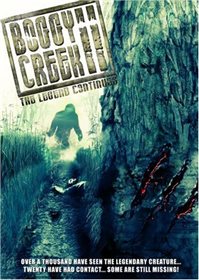
Boggy Creek II: And the Legend Continues
Dr. Brian C. Lockhart
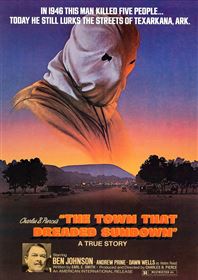
Town That Dreaded Sundown
Patrolman A.C. Benson
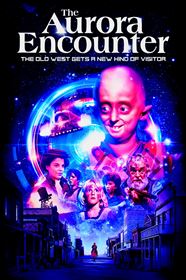
The Aurora Encounter
Preacher
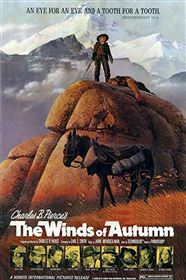
The Winds of Autumn
Ferd Hankins
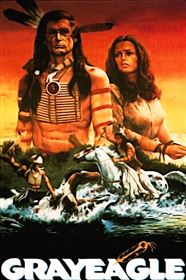
Grayeagle
Bugler
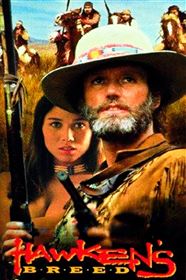
Hawken's Breed
Noel Hickman as an old man (voice)
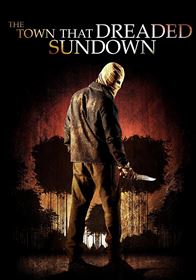
The Town That Dreaded Sundown
Man in Diner
The Town That Dreaded Sundown
Man in Diner
Hawken's Breed
Noel Hickman as an old man (voice)
The Aurora Encounter
Preacher
Boggy Creek II: And the Legend Continues
Dr. Brian C. Lockhart
Grayeagle
Bugler
Town That Dreaded Sundown
Patrolman A.C. Benson
The Winds of Autumn
Ferd Hankins